Navigation
Forgotten Women Painters
Hermine Biedermann-Ahrendts (1855-1916), Anna von Schubert (1884–1964) and
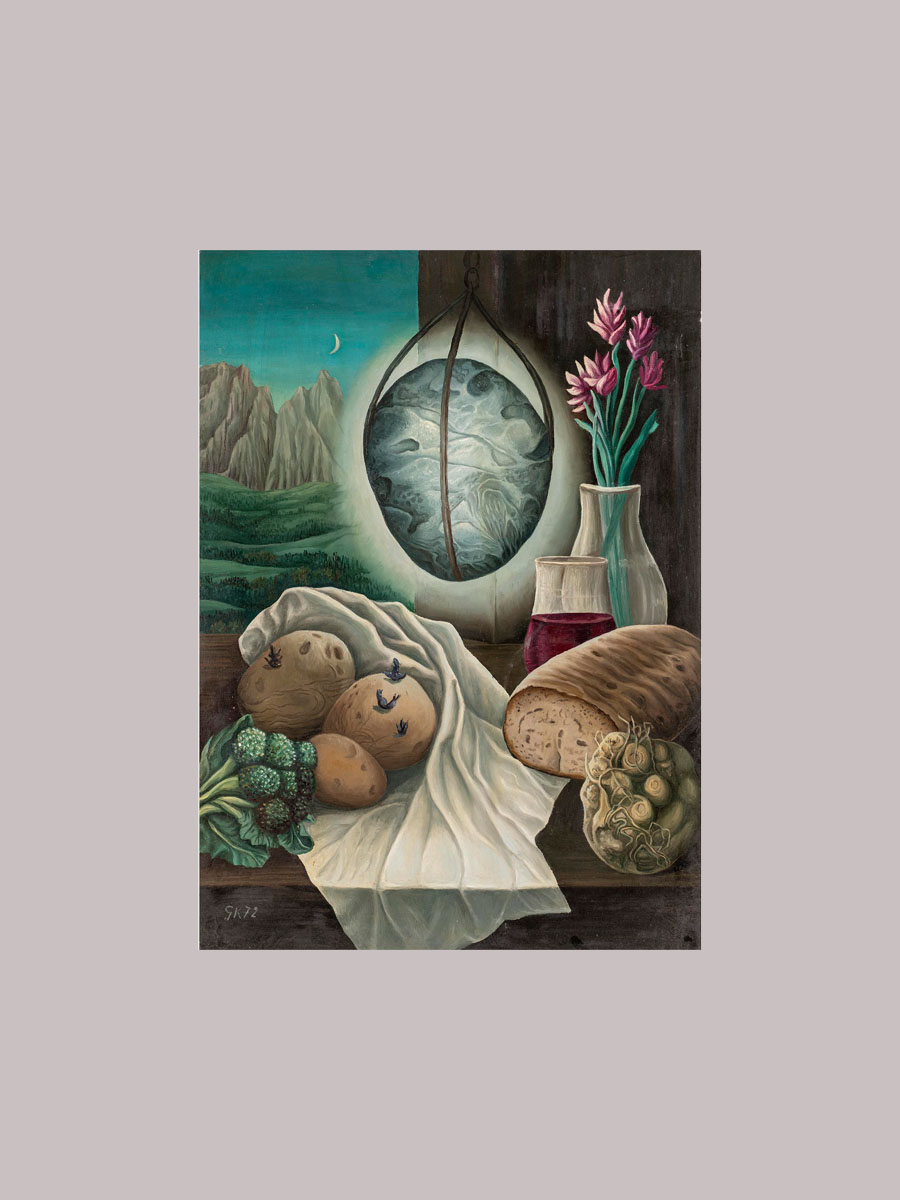
Gusti Knight-Stinnes (1912–1978, Garmisch-Partenkirchen)
Three generations of women painters, completely different life stories and artistic philosophies — but also with shared experiences.
What characterized all three artists was their strong determination to develop their artistic talent and become professional artists. At a time when women in the art world were far from being treated equally or taken seriously, this was a courageous step. More than half a century separates Hermine Biedermann-Arendts (*1855) and Gusti Knight-Stinnes (*1912), and especially regarding artistic education, much had changed during that period. Nevertheless, it is striking how women continued to be perceived by the art establishment well into the second half of the 20th century as less talented, less innovative, and less artistically independent than men.
Hermine Biedermann-Arendts was one of the artists who paved the way for the next generation of women by founding private painting schools and by serving as a model of a professional artistic career. Unlike the two younger painters, she did not aim to develop an entirely individual artistic style; instead, she adopted the style of the then-popular and successful Munich School and discovered the niche of humorous domestic animal paintings for herself. Yet she was an exceptionally skilled painter. Precisely within this niche, she was able to avoid direct competition with male painters and participate in numerous exhibitions. It can be assumed that she was financially the most successful of the three, as her paintings sold very well. One of her works, *Hunting Dog with Hare* (1879), entered the collection of the Old National Gallery in Berlin.
Anna von Schubert (*1884) and Gusti Knight-Stinnes (*1912) shared another important similarity: both pursued their goal of becoming professional artists with great determination. To do so, they had to leave the cities in which they had grown up and move alone as young women to the great art capitals of Munich and Paris in order to continue their studies professionally. Throughout their lives, both emphasized their desire to create an independent artistic body of work. As women working in a male-dominated world, both were especially critical of their own work and perhaps for that reason only began exhibiting relatively late.
Ultimately, after years of studying art and painting techniques, they succeeded — stylistically in completely different ways — in developing their own distinctive artistic voices. Anna von Schubert was finally able to free herself from her impressionist influences in China. In the people, temples, interiors, and landscapes there, she found the motifs that she would depict for decades in an increasingly reduced and sketch-like manner. Toward the end of her life, this evolved into abstract-looking compositions in which dynamic painterly gestures set the rhythm.
Gusti Knight-Stinnes, by contrast, followed the opposite stylistic path. In the solitude of her studio in Partenkirchen, she created over two decades a life’s work distinguished by its clear and precise linework. In her fantastic still lifes, she combined the human body — sometimes only hands, gloves, or masks — with elements of nature. Some of these surrealist compositions are conciliatory or even humorous. Another series of works, however, tells dark stories, repeatedly depicting alienated gray crowds within gray urban landscapes, from which a single colorful figure, hidden behind a mask, stands out. Her paintings raise questions and speak directly to us on a subconscious level.
Even during the artists’ lifetimes — all of whom lived for several years or decades here in Garmisch-Partenkirchen — their work was little known. After their deaths, they fell completely into obscurity. Their paintings are scarcely represented, if at all, in public collections. Their work therefore stands as an example for many women artists born between the mid-19th and early 20th centuries who devoted themselves to painting with talent, concentration, and great seriousness, but whose voices found little recognition in the art world. This exhibition contributes to their rediscovery and appreciation.

Museum Werdenfels e.V.
Ludwigstraße 47
82467 Garmisch-Partenkirchen
08821 - 751710
info@museum-werdenfels.de
Directions
Opening Hours
Tuesday to Sunday: 10 am to 5 pm.
Also open on Mondays if they are public holidays.
Tickets
Admission from €4.50
Parking in the underground garage is free for 2 hours
More information